Content
Women's Day 2026: High-tech, low diversity

New study on women in STEM fields: Proportion of women in European patent applications from Germany remains at 10 per cent
The European Patent Office (EPO) Observatory on Patents and Technology is today publishing a new study on women in STEM professions. The analysis highlights the slow pace of progress and examines the gaps that exist across Europe at various stages of a STEM career. Published in the run-up to International Women's Day, the report provides valuable insights into where women's potential is lost along the ‘leaky pipeline’. It also underscores the importance of initiatives such as "Metaproject Innovative Women in Focus", which specifically promotes the visibility of outstanding female innovators.
The study shows that the proportion of female inventors in Europe has risen only slightly in recent years, from 13 per cent in 2019 to 13.8 per cent in 2022. Although women are often part of inventor teams, they are much less likely to be named as sole inventors.
Germany continues to have one of the lowest participation rates of women in the European patent system. The Women Inventor Rate (WIR), which measures the proportion of women in European patent applications, rose only slightly from 9.7 per cent in the period 2013–2017 to 10.3 per cent in the years 2018–2022. Despite this marginal improvement, women's participation in patent applications remains at a consistently low level. Germany's gap to the EU average can be explained to a large extent by the specific structure of patent applications: Germany has a high proportion of applications from companies. In addition, German patent applications are highly specialised in fields of technology where the proportion of female inventors is traditionally particularly low.
Düsseldorf and Rostock show strong momentum among female inventors
Among Europe's 30 leading innovation clusters, Düsseldorf has the highest proportion of female inventors among German regions. In the period 2018–2022, this figure stood at 19.1 per cent, which is primarily attributable to the high degree of specialisation in the chemical sector. Rostock also experienced particularly dynamic growth: the city is one of the 30 European regions with the strongest growth in patent applications to the European Patent Office. At the same time, the proportion of female inventors doubled to 22 per cent compared to the 2013–2017 period, which is well above the national average. An analysis of all European regions shows that the most innovative regions have higher proportions of female inventors than the national averages, suggesting that leading innovation clusters offer a more inclusive environment.
Proportion of women varies greatly depending on the field of technology
Across Europe, the participation of women varies greatly depending on the field of technology. Their share is highest in the life sciences: pharmaceuticals (34.9 per cent), biotechnology (34.2 per cent) and food chemistry (32.3 per cent) have the highest proportion of female inventors. In contrast, some of the most patent-intensive fields of engineering show the lowest figures: machine tools (5.7 per cent), basic communication processes (5.5 per cent) and mechanical components (4.9 per cent). Universities and public research institutions have by far the highest proportion of female inventors (24.4 per cent), while SMEs and individual applicants have the lowest participation rates.
Women remain severely underrepresented in tech entrepreneurship
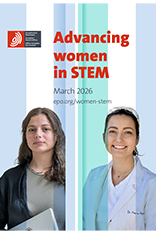
The gap is particularly pronounced among European start-ups that apply for patents. Only 13.5 per cent of these companies have at least one female founder. There are major differences across Europe: Spain, Portugal and Ireland have the highest participation rates, while the Netherlands, Austria and Germany are at the bottom of the list in this respect.
Among younger start-ups, the proportion of female founders is higher at 14 per cent, compared to only around 5.9 per cent in companies that are more than 20 years old. This indicates increasing diversity among new start-ups. At the same time, companies co-founded by women appear to encounter greater barriers in the growth phase: the proportion of women declines significantly in advanced financing rounds.
Gender gap and untapped innovative potential
Women continue to be underrepresented among doctoral graduates with patent applications in all countries, even though they are well represented at the doctoral level. The gender gap widens at every career stage and provides a typical example of a continuing ‘leaky pipeline’. This is particularly evident in the transition to the commercialisation of inventions. The study shows that women's research results have a comparable innovation potential to those of men. The lower participation of women in patent applications cannot therefore be explained by differences in the quality of research results.
Further information on the study and the full report can be found on the  website of the European Patent Office.
Creating visibility: Focus on innovative women
To raise the profile of innovative women, the Federal Ministry of Education and Research (BMBF) promotes the guideline "Focus on Innovative Women", which also gave rise to the meta-project Metavorhaben "Innovative Frauen im Fokus (meta-IFiF)" . It networks research and implementation projects, strengthens exchange and ensures greater public attention through targeted communication measures.
The flagship projects include initiatives such as "SiGi – Visibility of Innovative Founders" and "InnoGründerinnen" (Innovative Female Founders). SiGi, for example, presents female founders such as Michelle Spitzer (eco:fibr), Joana Gil (Lignopure GmbH) and Tanja Zirnstein (UVIS UV-Innovative Solutions GmbH). This creates tangible role models who offer guidance and point the way to success.
The external link platform #InnovativeFrauen also gives women from science, business and society a digital stage and makes their ideas accessible to a broad public. These examples show that greater visibility helps to make the innovative achievements of women more widely recognised and further breaks down structural barriers.
Picture: DrAfter123
Last updated: 3 March 2026
Not only protecting innovations
Social Media