Content
PATINFO 2026
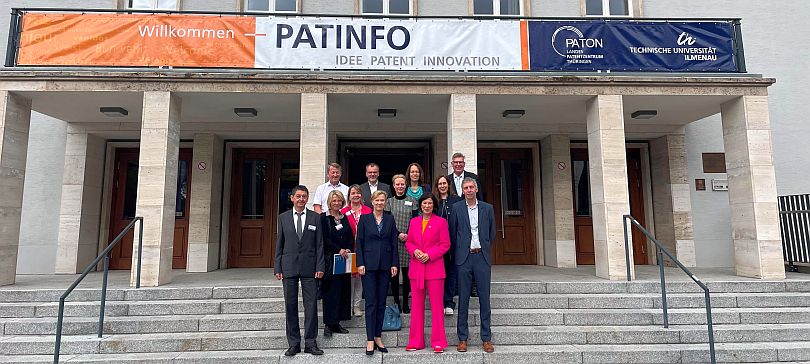
The PATINFO team with DPMA President Eva Schewior (front centre)
Using intellectual property rights strategically to boost competitiveness and prosperity
DPMA President Eva Schewior highlighted the strategic importance of intellectual property rights for Germany’s future as a business location at the  PATINFO 2026 in Ilmenau. She described the recent rise in the number of applications for patents, trade marks and designs as an important indicator of the innovative strength of German companies.
Encouraging signs for the innovation hub
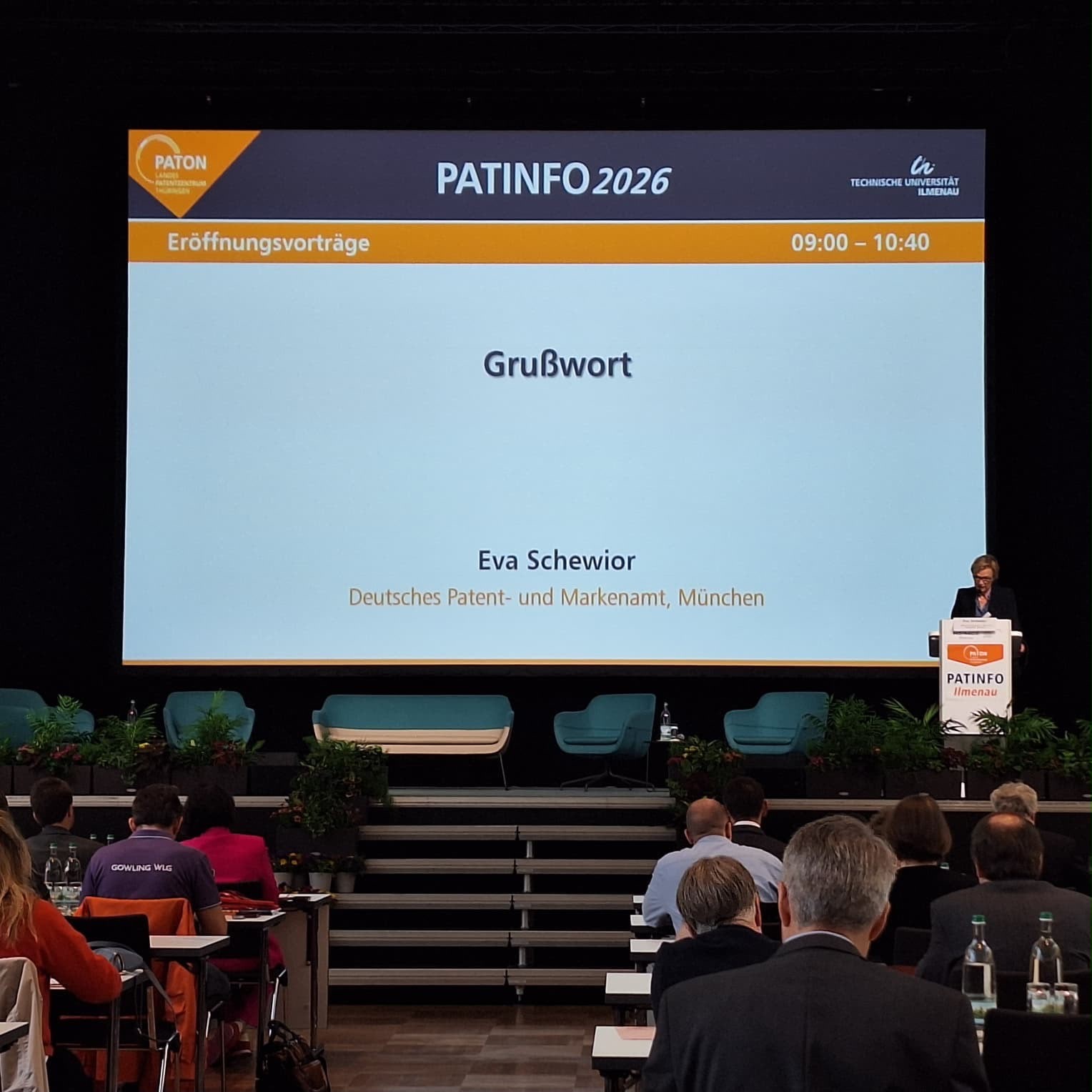
DPMA President Eva Schewior
Thuringia – a region with a particularly high number of patents
Schewior also highlighted Thuringia's innovative strength. With 24 patent applications per 100,000 inhabitants, the state ranks firmly in the upper mid-table of German states in terms of patent applications. The Technical University of Ilmenau, in particular, ranks among Germany’s most patent-intensive universities. According to a recent study by the German Economic Institute, researchers at the Technical University of Ilmenau have filed the second-highest number of patents among German universities over a five-year average.
The Thuringia State Patent Centre (PATON), located on the TU Ilmenau campus, plays an important role in this regard. The DPMA has been working closely with the Patent Information Centre for many years and, together with its partners, supports companies, research institutions and inventors in protecting their innovations.
A focus on future technologies
With regard to technological developments, Schewior highlighted the growing importance of artificial intelligence and quantum technologies. German companies are becoming increasingly involved in these forward-looking fields. At the same time, she said, Germany must translate its strengths in research and technology into marketable products and successful business models even more consistently.
The President of the DPMA attached particular importance to small and medium-sized enterprises. They form the backbone of the European economy, yet have so far made relatively little use of intellectual property rights. According to European Union figures, only around ten per cent of SMEs protect their intellectual property through industrial property rights. In this context, Schewior also emphasised the importance of raising awareness among small and medium-sized enterprises regarding the protection of intellectual property.
Will AI drive innovation?
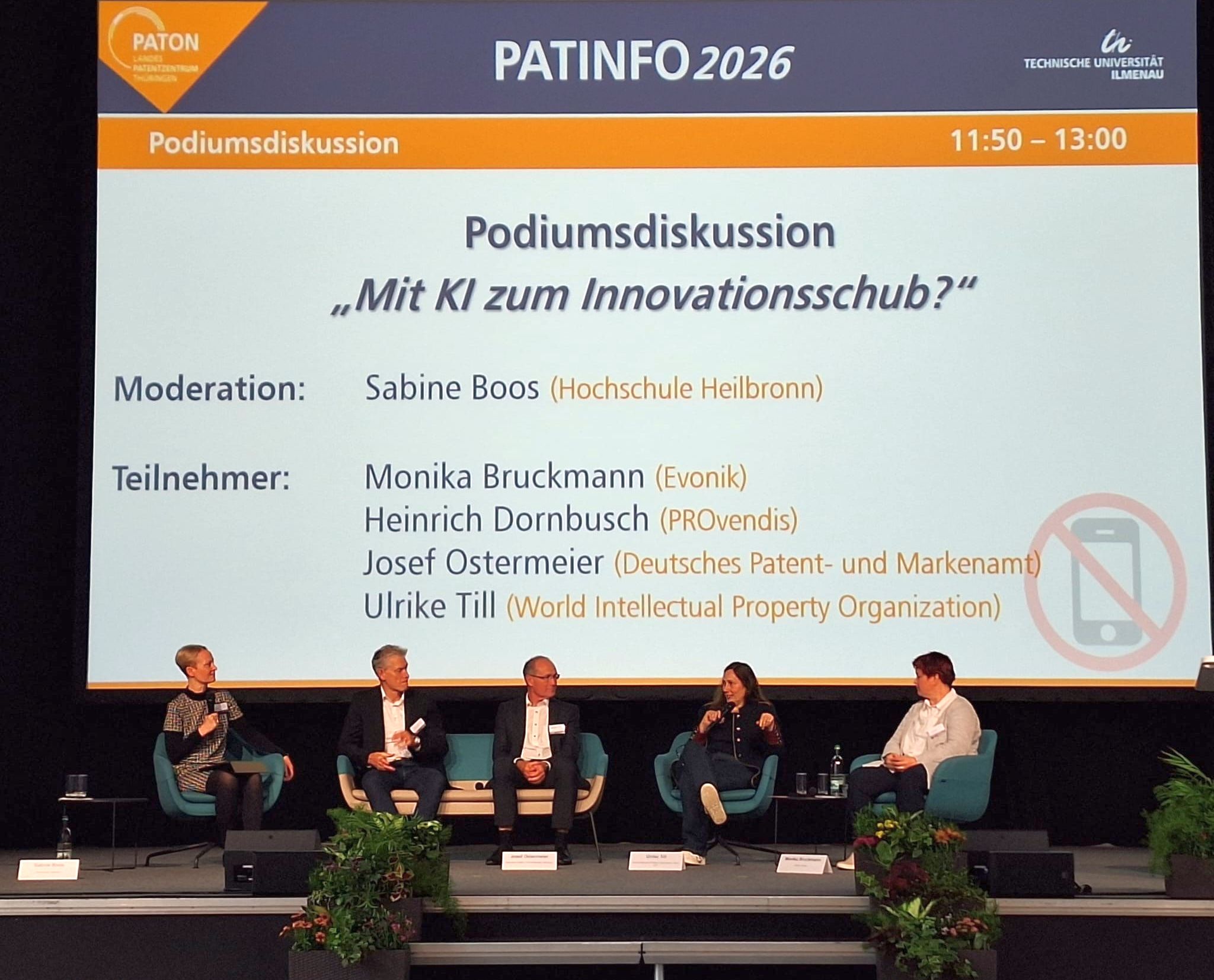
Panel discussion with DPMA representative Josef Ostermeier (centre)
Josef Ostermeier represented the German Patent and Trade Mark Office at the subsequent panel discussion entitled "Can AI drive innovation?". Together with representatives from industry, academia and public authorities, he discussed the opportunities and challenges posed by artificial intelligence for innovation and intellectual property.
The focus was on issues of competitiveness, technology transfer and the role of intellectual property rights in an economy increasingly shaped by AI. The participants also discussed which framework conditions can accelerate innovation and promote the commercial exploitation of new technologies.
Pictures: DPMA
Last updated: 18 June 2026
Not only protecting innovations
Social Media