Content
Product piracy – organised crime
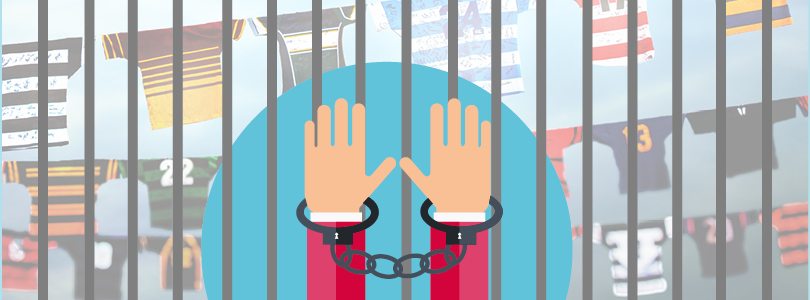
Product piracy is no trivial offence. The deliberate infringement of intellectual property rights is a criminal offence. A conviction can result in fines or prison sentences of up to five years. A report by Europol and the European Union Intellectual Property Office (EUIPO) shows that product piracy is not only linked to other offences such as money laundering, cybercrime, tax offences and environmental crimes. It also serves as a source of funding for criminal networks. By purchasing counterfeit goods, consumers are supporting these criminal structures.
As part of the new EU plan to combat economic and financial crime, the fight against product piracy is also part of the new EMPACT cycle (2026–2029). Product piracy is being tackled at EU level through targeted, coordinated actions.
Product piracy: A network of stakeholders for strong protection
As a global issue, and given the sheer volume of counterfeit goods and copyright-infringing content, the enforcement of intellectual property rights requires a strong network.
These stakeholders are key in Germany:
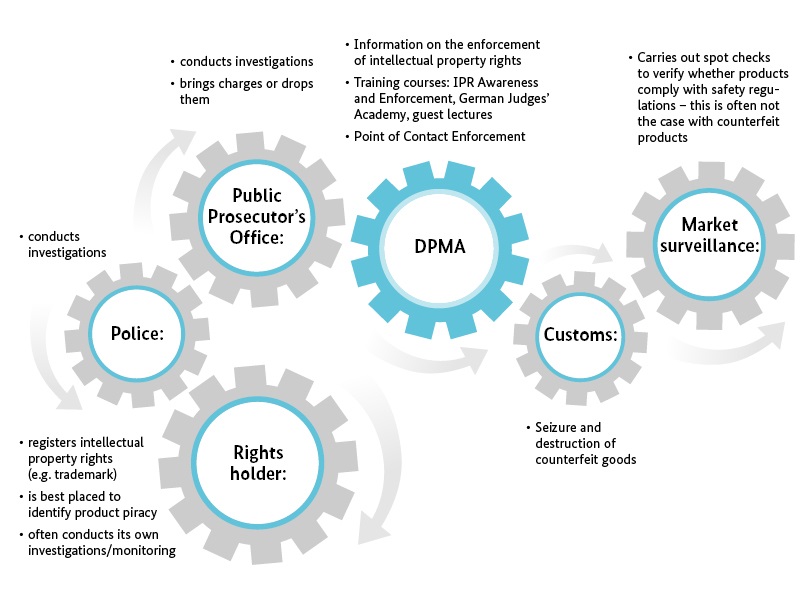
- Rights holders: Protect their innovations by registering intellectual property rights (such as a trademark). They know their products best and are best placed to identify counterfeits. They generally monitor the market for third-party products that infringe their intellectual property rights. They sometimes also conduct their own investigations, e.g. with the help of private investigators. Or they initiate criminal investigations, for example by filing a criminal complaint with the police or the public prosecutor's office.
- Customs: Customs authorities take action where there is a suspicion of an infringement (often involving trademark infringement). They seize and destroy counterfeit goods – provided the rights holder has submitted the relevant applications.
- Police and public prosecutor's office: Conduct criminal investigations.
- Market surveillance: The authorities carry out random checks to ensure that a product complies with statutory safety regulations. There is a link between unsafe and counterfeit products.
- Federal Network Agency (BNetzA): Ensures compliance with the provisions of the Digital Services Act (DSA). In its capacity as Digital Services Coordinator, the Federal Network Agency may initiate regulatory proceedings. Appoints Trusted Flaggers.
- Federal Ministry of Justice and Consumer Protection (BMJV): Responsible for legislative procedures and initiatives in collaboration with other agencies.
- German Patent and Trade Mark Office (DPMA): Registers industrial property rights. Provides information on intellectual property rights and their enforcement. For example, at the IPR Awareness and Enforcement Symposium, at the German Judges' Academy or during guest lectures. The DPMA also serves as the "Enforcement Point of Contact".
Lecture on product and brand piracy
"Not all unsafe products are counterfeit, but many counterfeit products are also unsafe." Whether it's cosmetics, car parts, electrical goods or children’s toys: to ensure that consumers can use these (and other) products safely, they must meet certain safety standards.
Market surveillance authorities use random checks to verify whether products available in shops or online comply with the relevant legal (safety) regulations. Cheap, counterfeit goods often fail to meet safety standards.
Against this backdrop, the DPMA accepted an invitation from  Zentralstelle der Länder für Sicherheitstechnik and, as part of a series of lectures for market surveillance authorities, provided information on the dangers and consequences of product and trademark piracy.
Picture 1: gettyimages/Edwin Leung, iStock.com/makyzz and DPMA, Picture 2: DPMA
Last updated: 7 May 2026
Not only protecting innovations
Social Media