Content
How can I tackle counterfeit products?
As Europe's largest market, Germany is a major target for counterfeiters. The vast majority of counterfeit goods originate from non-EU countries such as China, Turkey, India or the United Arab Emirates. Germany was the destination for around a quarter of the value of goods seized at the EU’s external borders; see, for example,  https://www.tagesschau.de/wirtschaft/verbraucher/faelscherware-markenartikel-verbraucher-unternehmen-100.html.
The deliberate commercial importation of and trade in counterfeit goods are criminal offences. Counterfeit goods may be seized and destroyed by customs.
Seizure at the border by customs: What you need to do as the rights holder
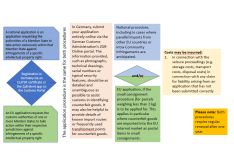
 Overview of eAFA – enlarged view
If, as a rights holder, you wish customs authorities at EU borders to protect your rights and detain goods suspected of infringing intellectual property rights, you must submit a request for action (AFA) to customs. Representatives may also submit this request on your behalf.
Since 3 October 2024, such applications in the EU must generally be submitted electronically as an eAFA via the IP Enforcement Portal (IPEP). An exception applies in Germany: here, rights holders and their representatives must submit the application for border detention via the German customs' national online portal.
The following steps are required:
1. Apply for an ELSTER organisation certificate (if you do not already have one)
2. Register on the Customs Portal
3. Complete the AFA application (application for action by the customs authorities)
4. Submit the application
Further information on submitting the application can be found at: ZGR-online
Electronic Applications for Action (eAFAs) – how it works
If customs suspect that a consignment contains counterfeit or otherwise infringing products, they will contact the company concerned using the contact details provided in the application.
If you have submitted a Union application, you will be contacted via the competent customs authority of the relevant EU Member State. If the application was submitted in Germany, the German customs authorities will contact you.
Once you have been notified, you have ten working days to confirm whether there is indeed an infringement of your intellectual property rights. You must also decide within this period how to proceed. It is therefore important to be well prepared for this scenario when submitting the application. The procedure is based on EU Regulation No 608/2013.
Border seizures are an effective means of combating counterfeit products. This requires a well-prepared and fully documented application, as well as close cooperation with customs. It is important to have a current overview of your intellectual property rights (for example, trade marks and designs), clear product documentation and regular updates. Active cooperation with the customs authorities – for example via the customs portal – significantly increases the chances of success.
Picture: gettyimages/Edwin Leung, iStock.com/makyzz and DPMA, Bild 2: DPMA
Last updated: 6 May 2026
Not only protecting innovations
Social Media