Content
Porcelain, cuckoo clocks, knives: new protection for regional products
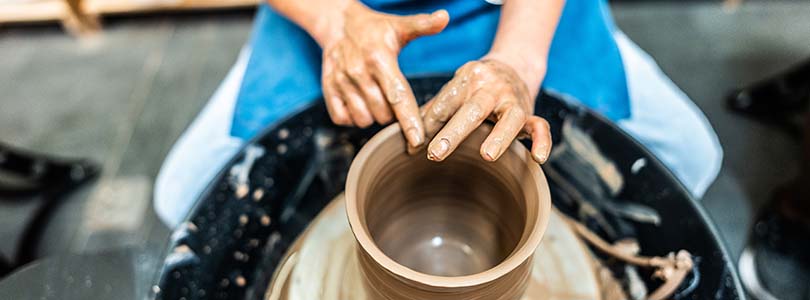
Producers of craft and industrial products now have the option to seek Europe-wide protection through a geographical indication at the German Patent and Trade Mark Office – DPMA President: protected indications of origin help preserve traditional know-how and safeguard regional value creation and jobs
Press release of 16 January 2026
Munich. Knives from Solingen, porcelain from Meißen, cuckoo clocks from the Black Forest: producers of craft and industrial products linked to a specific region now have the option to file an application with the German Patent and Trade Mark Office (DPMA) for Europe-wide protection as a geographical indication for the names of their products. This right is based on a regulation of the European Union from 2023 (Regulation (EU) 2023/2411); in Germany, the regulation is implemented by the Geographical Indications Reform Act (Geoschutzreformgesetz), which has now entered into force.
“Protected indications of origin emphasise the importance of regional products and create awareness of their value. Moreover, they help preserve traditional know-how in the respective regions, increase value creation and safeguard local jobs,” DPMA President Eva Schewior says. “We at the German Patent and Trade Mark Office are pleased that, as the contact point for our German producers, we can help promote regional culture and economic power.”
Names of products originating in a specific geographical area, the quality, reputation or other characteristics of which are attributable to that particular origin, can be protected as geographical indications. With the new EU regulation, uniform protection at EU level, which has so far only been established for wine, spirit drinks and agricultural products (agricultural geographical indications – AGRI GIs), will be extended to cover craft and industrial products (craft and industrial geographical indications – CIGIs).
All products produced by hand or in a standardised way and by using machines are eligible for protection. For example, this includes watches, cutlery, fabrics, porcelain, woodwork, jewellery, textiles, natural stones and glass. To be granted protection as a geographical indication, the product must originate in a specific place, region or origin. Furthermore, the given quality, reputation or other characteristic of the product must be essentially attributable to its geographical origin. In addition, at least one of the production steps must take place in that geographical area. According to the EU, potential products range from wood art from Erzgebirge to Jena glass and Mittenwald violins to ties from Krefeld and Schweinfurt ball bearings. A list of products from various German regions is available on the website of the  European Union Intellectual Property Office (EUIPO).
In accordance with the EU regulation, applications for registration of a geographical indication for craft and industrial products have already been possible since 1 December 2025. The German act designates the DPMA as the competent body in Germany. From now on, applications concerning agricultural products – for which the DPMA has been competent so far – will have to be filed with the Federal Office for Agriculture and Food.
Applications can be filed with the DPMA electronically through the GIportal of the European Union Intellectual Property Office. The examination procedure is a two-stage procedure: in the national phase, the DPMA examines the application, manages the national opposition procedure, if any, and, following the positive completion of the procedure, submits the application to the EUIPO. In the second phase, the EUIPO continues the procedure at Union level and takes a final decision on the registration. Additional information is available on the EUIPO website. Names of craft and industrial products for which an application for registration as a geographical indication has been filed or which have been registered as a geographical indication will be entered in the electronic Union register of the EUIPO.
The German Patent and Trade Mark Office
Inventiveness and creativity need effective protection. The DPMA is the German centre of expertise for all intellectual property rights – for patents, utility models, trade marks and designs. As the largest national patent office in Europe and the sixth largest national patent office in the world, it represents the future of Germany as a country of inventors in a globalised economy. Its approximately 2,800 employees at three locations – Munich, Jena and Berlin – provide services to inventors and companies. They implement the Federal Government's innovation strategies and further develop national, European and international protection systems.
Bild: iStock.com/FG Trade
Last updated: 16 January 2026
Not only protecting innovations
Social Media