
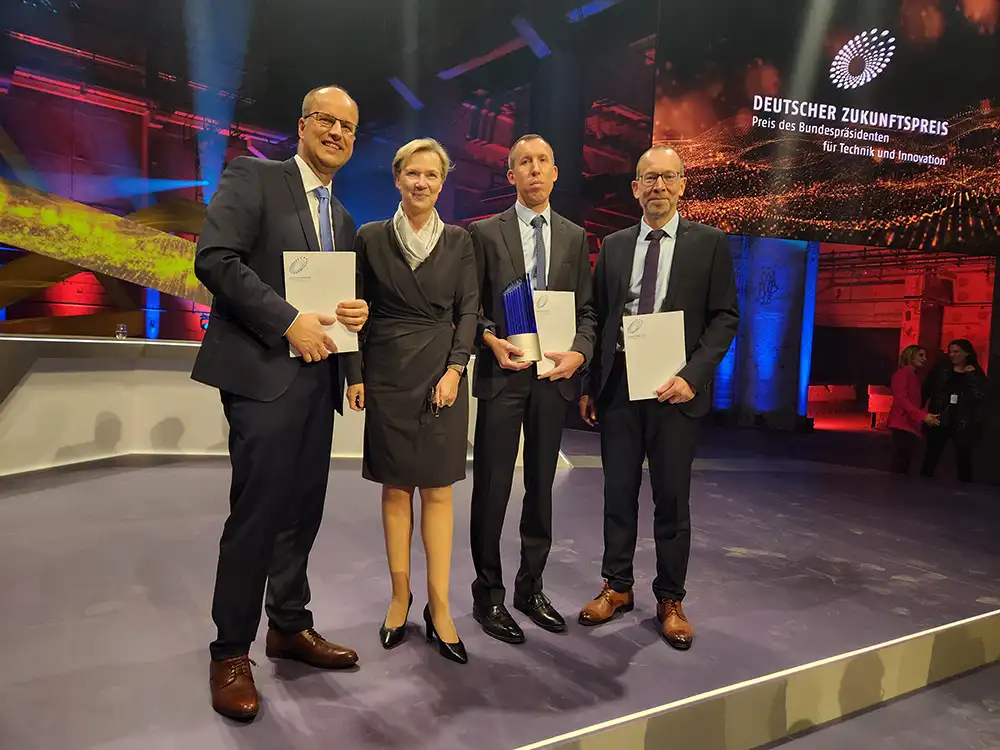
“The winners are the outstanding teams that are given a major platform for their developments. The winner is Germany as a business location, which gains new impetus. And the winner is also our society, as all examples show that protected innovations can help tackle social challenges and improve people’s lives.”
This is what DPMA President Eva Schewior said at the Deutscher Zukunftspreis. But the recognition could just as well apply to the other innovation awards supported by the DPMA.
The President and other senior staff of the DPMA serve as members of juries or are part of boards of trustees. Patent examiners contribute their expertise to various evaluation processes.
www.deutscher-zukunftspreis.de/en
The Deutscher Zukunftspreis award honours outstanding research and development projects and pioneering technologies. For the selection of the award winners, the scientific-technological degree of innovation and the potential for incorporating this achievement into sustainable jobs are crucial factors. The award comes with a prize money of 250,000 euros and is personally awarded by the Federal President.
The DPMA President is a member of the board of trustees, which determines the direction of the selection decisions. Moreover, the DPMA is entitled to propose promising innovations to the jury.
The 29th Deutscher Zukunftspreis was presented by Federal President Frank-Walter Steinmeier to the team of Robert Bosch GmbH (Stuttgart) consisting of Christoffer Uhr, Kai Weeber and Pierre Andrieu for developing a new fuel cell system for long-haul trucks.
While batteries are a good solution for passenger cars, they are only a limited option for heavy goods vehicles. In view of the performance required here, they would have to be very big. As a consequence, they would become too heavy and their charging times would get too long. Contrary to this, fuel cells enable a long range, quick refuelling and a considerably higher payload.
Unlike battery-powered vehicles, which use electricity stored in batteries, a fuel cell generates electrical energy directly through the chemical reaction of hydrogen and oxygen to form water. The team has developed an entire suitable “Fuel Cell Power Module” and a complex regulation. The power module is not only highly efficient, but also functional and economic under extreme conditions. The system has already gone into series production and is used in thousands of trucks. However, for the solution to be truly environmentally friendly, it is crucial to use green hydrogen which is produced from renewable energies.
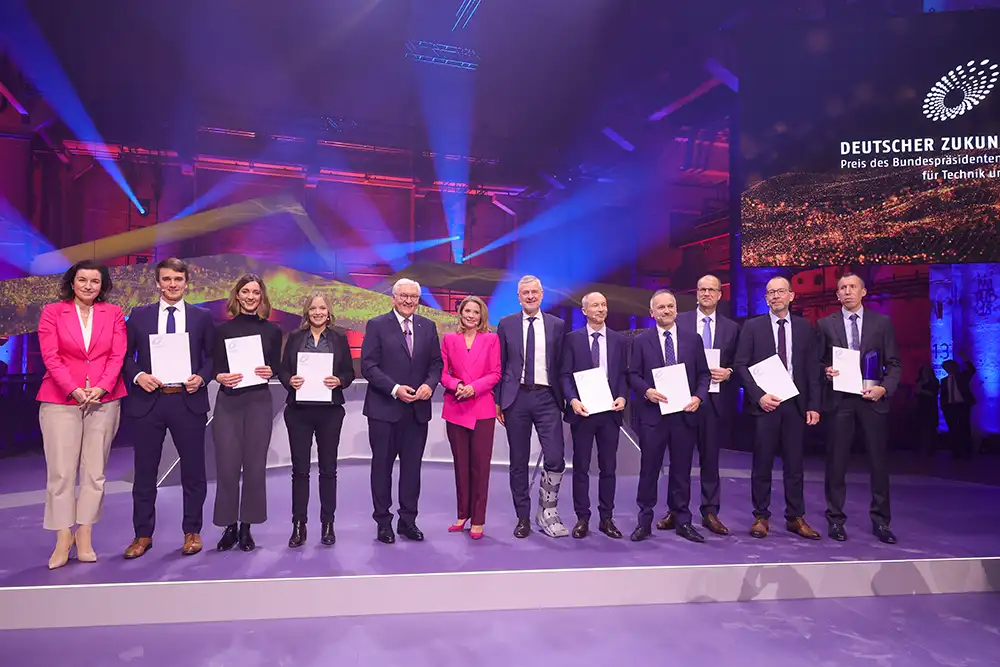
The following teams were also nominated for the Deutscher Zukunftspreis award 2025:
Dr Anne Lamp, Sina Spingler and Niklas Rambow (traceless materials GmbH, Hamburg) with their project “Biomass instead of microplastics — innovative biomaterials replace fossil plastics” as well as Dr Mark Bischoff, Dirk Mühlhoff and Dr Gregor Stobrawa (Carl Zeiss Meditec AG, Jena) with their project “Vision correction for millions of people – ultra-short light pulses permit minimally invasive laser eye surgery”. The innovative eye laser surgery was submitted as proposal for the contest by the DPMA.
Let us know about your innovation and send us your ideas and projects. Proposals for the Deutscher Zukunftspreis 2027 can be submitted until the beginning of November 2026. For more information, please visit our webpages.
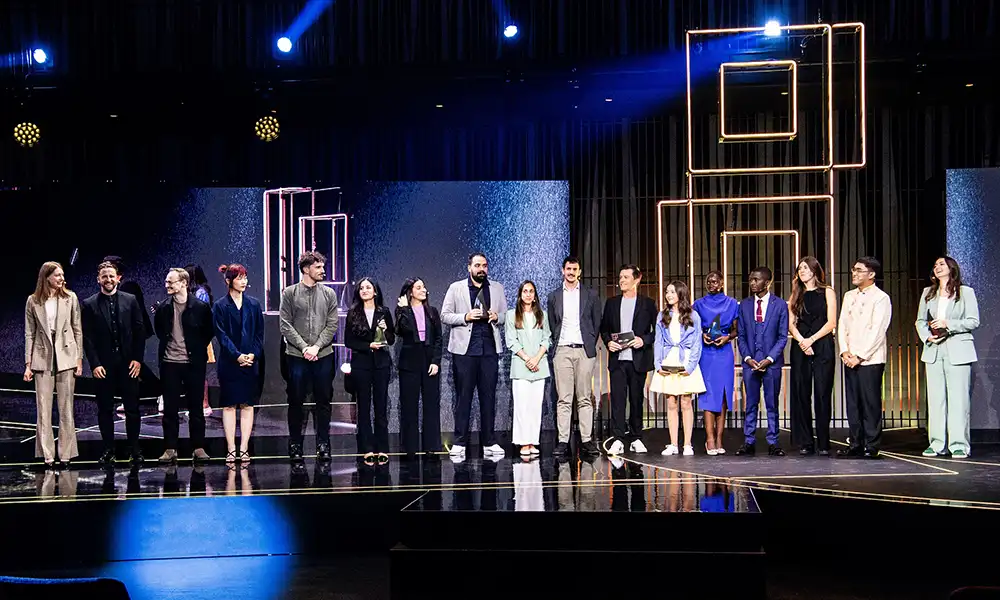
In 2025, the European Patent Office awarded the Young Inventors Prize at a separate event for the first time. The Young Inventors Prize and the European Inventor Award will now be awarded alternately each year.
The prize rewards people for inventions that have contributed to achieving the Sustainable Development Goals of the United Nations.
It is awarded to persons up to 30 years old and serves to show how solutions of clever young people can change the world. Moreover, it honours remarkable young people who shape a sustainable future.
You can read more about the award winners of the respective categories on the webpages of the Young Inventors Prize.
www.innovationspreis-bayern.de (in German)
The Bavarian Innovation Prize is awarded every two years. The next award ceremony will take place in 2026. The DPMA is represented by Vice-President Bernd Maile as a member of the jury.
www.innovationspreis-thueringen.de (in German)
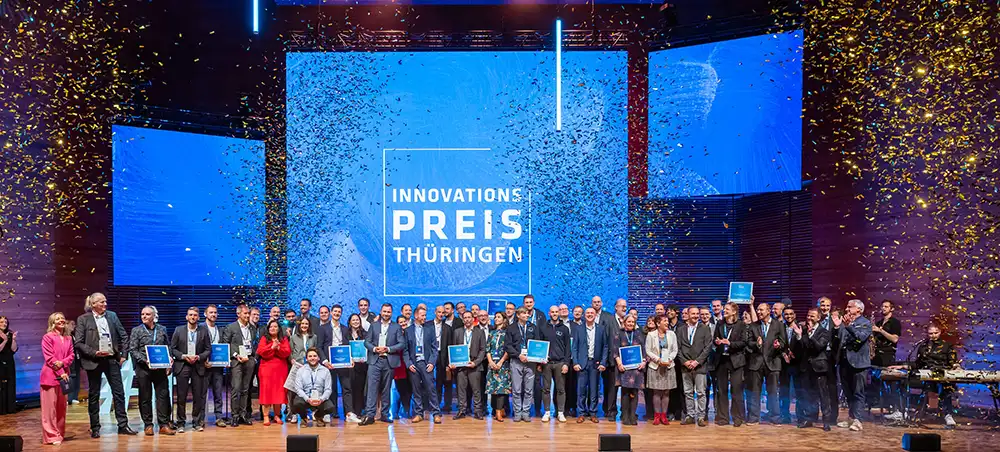
The Thuringia Innovation Award is one of Germany's most prestigious awards for innovative ideas and reflects the innovative strength of the region. For 28 years now, the award has recognised developments coming from Thuringia that have made a significant contribution to economic, technological and social progress.
The Thuringia Innovation Award is a contest of the Thuringian Ministry of Economic Affairs, Agriculture and Rural Areas, the Foundation for Technology, Innovation and Research Thuringia, TÜV Thüringen e. V. and the Ernst Abbe Foundation.
The DPMA was once again represented in the 13-member jury by Markus Ortlieb, Head of the Jena sub-office.
The prize winners of the individual categories can be found on the webpages of the Thuringia Innovation Award.
60 years of Jugend forscht — and relevant as ever
“We are looking for the scientists of tomorrow!” And we have been doing so ever since Henri Nannen, chief editor of the magazine stern, initiated the first round of Jugend forscht in 1965. For six decades, the competition has inspired young people to take an interest in science, technology and innovation and has recognised outstanding achievements.
This year, 10,350 young scientists registered for the Jugend forscht contest. They participated with 5,664 projects in the fields of science, technology, engineering and mathematics, of which 112 projects qualified for the federal contest.
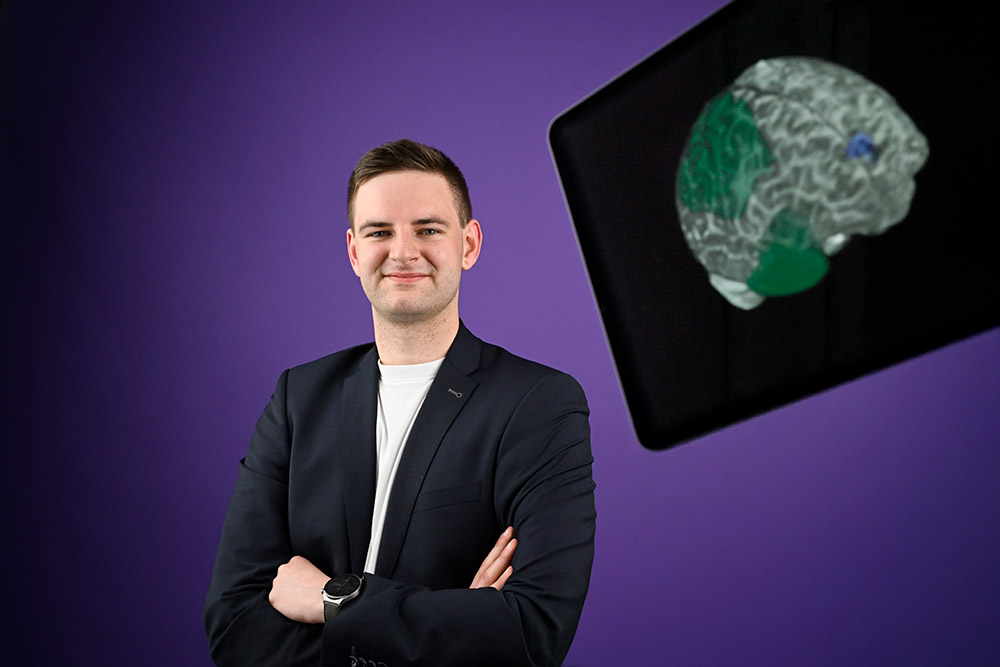
Many of these projects dealt with AI applications across all disciplines. Jugend forscht winner David Rutkevich was honoured for the “best interdisciplinary work”: his project involves the invention of a self-learning AI model that helps complete missing or incomplete image information. It can be used to detect tumours in MRI images more precisely.
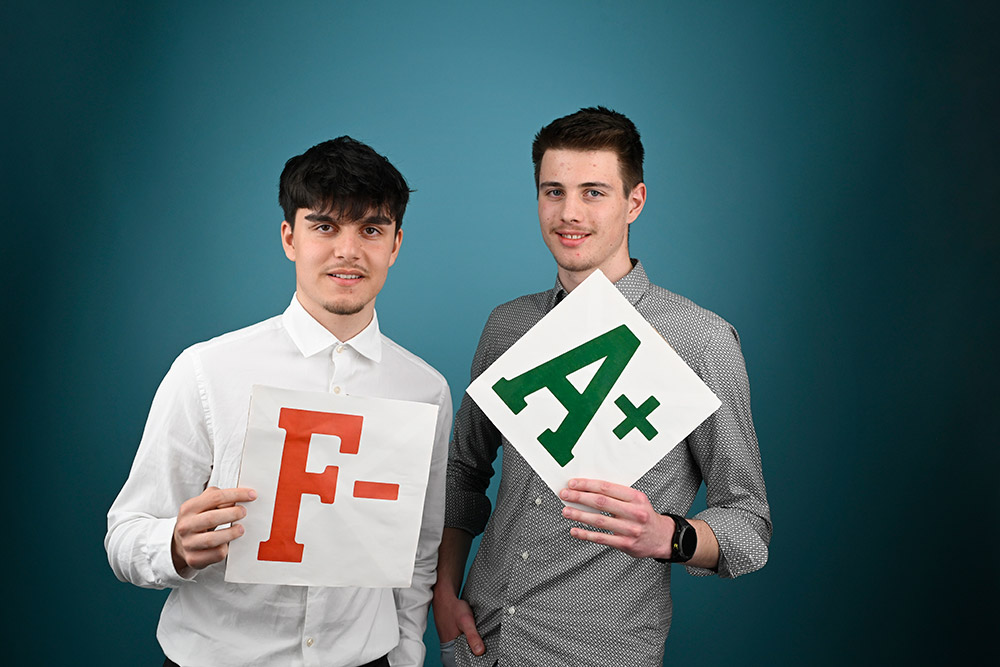
The Federal President’s prize for “outstanding work” went to Oskar Rost and Marius Strauß from Thuringia. The two students want to enable greater transparency and fairness in the assessment of school performance. For this purpose, they have developed an AI-based software that automates error detection, point deductions and grade suggestions in exams. The results underwent a reality test and indicated significant time saving in the evaluation process and a more transparent error analysis. This way, the participants showed that they also carry out intensive research regarding the use of AI in diverse areas, thus becoming the “scientists of tomorrow”.
We wish all prize winners continued success in the future!