
IP rights in figures
Patents

158,848
patents in force on 31/12/2025

45,839 (+1.3%)
examination procedures concluded

24,475 (+2.2%)
grants published
62050
+4.7%
Applications in total and change in %
19,701
+2.8%
including applications from abroad
91.8%
Online applications
(National patent applications)
Utility models

62,944
utility models in force on 31/12/2025

10,838 (+9.2%)
registration procedures concluded

9,750 (+7.6%)
with registration
11427
+19.3%
Applications in total and change in %
5,163
+19.2%
including applications from abroad
67.3%
Online applications
(National utility model applications)
Trade marks

909,659
trade marks in force on 31/12/2025

82,542 (+10.2%)
registration procedures concluded

55,863 (+11.7%)
with registration
93291
+20.8%
National applications in total and change in %
14,569
+109.3%
including applications from abroad
90.0%
Online applications
(National trade mark applications)
Designs

226,690
designs in force on 31/12/2025

3,667 (-8.6%)
procedures concluded for a total of 27,161 designs

3,259 (-8.2%)
with registration for a total of 25,377 designs
25377
-9.5%
Registered designs in total and change in %
1,244
-39.5%
including applications from abroad
93.5%
Online applications
(Design applications)
PDF version
Reader-friendly, multimedia and optimised for mobile use: We publish the DPMA Annual Report digitally in HTML format.
If you would like to keep a copy of the report for your records, you can download a largely automatically generated working version in PDF format here.
Photo: GettyImages/koto_feja
PrefaceDear readers,
if you want to describe how quickly our world is evolving, you can use to following number: every minute, around 40 IP rights are filed world-wide. This was calculated by the World Intellectual Property Organization last year. And it means that almost every second, someone somewhere is applying for an IP right — for example, because they invented something new or developed a new design. Or because they want to use a trade mark for the distribution of new products and services. By the time you finish reading this text, around 100 additional creative accomplishments will have been registered. What a tremendous potential for change!
Sometimes the crises in our world cast a dark shadow over our mood; at times, it is difficult to still believe in productive solutions. This is why I find it incredibly rewarding to work in an environment where we see proof of the creative power of humanity every day. And the application numbers all over the world show: the option to protect intellectual property enables us to harness this power. Even Werner von Siemens back then considered patent protection to be crucial for advancing industrial progress. Let me put it in more general terms: the protection of intellectual property is a driving force for solving social challenges.
Our annual report illustrates what this means in practice: quantum technology is considered to be the next key technology with as much ground-breaking potential as artificial intelligence. For example, in research, high-performance computers using this technology could carry out simulations of complex processes. Instead of testing multiple substances in a laboratory, they could calculate their effect without using a single real test subject. Our analysis shows that the number of published patent applications with effect for Germany in this field has increased significantly in the last ten years. The same applies to patent applications in the field of battery technology, which enables electromobility and the effective use of renewable energy. And the number of inventions for solar technology and wind turbines remains high as well. At the same time, the enormous increase in trade mark applications is proof of the general huge interest to operate on the German market.
The German Patent and Trade Mark Office actively supports these developments with our strong commitment to offer examinations of the highest quality and to carry out procedures as efficiently as possible: we have noticeably increased the number of completions in almost all divisions. But we also play a significant role in raising awareness of the value of IP rights, especially among SMEs, and in educating the public about the importance of intellectual property. You can find out what we do and how to use our services on the following pages. Because one thing is clear: the protection of IP rights is not the exclusive right of a few experts or big enterprises. It offers advantages for everyone and is there for all of us!
I hope you enjoy this report — and stay innovative!
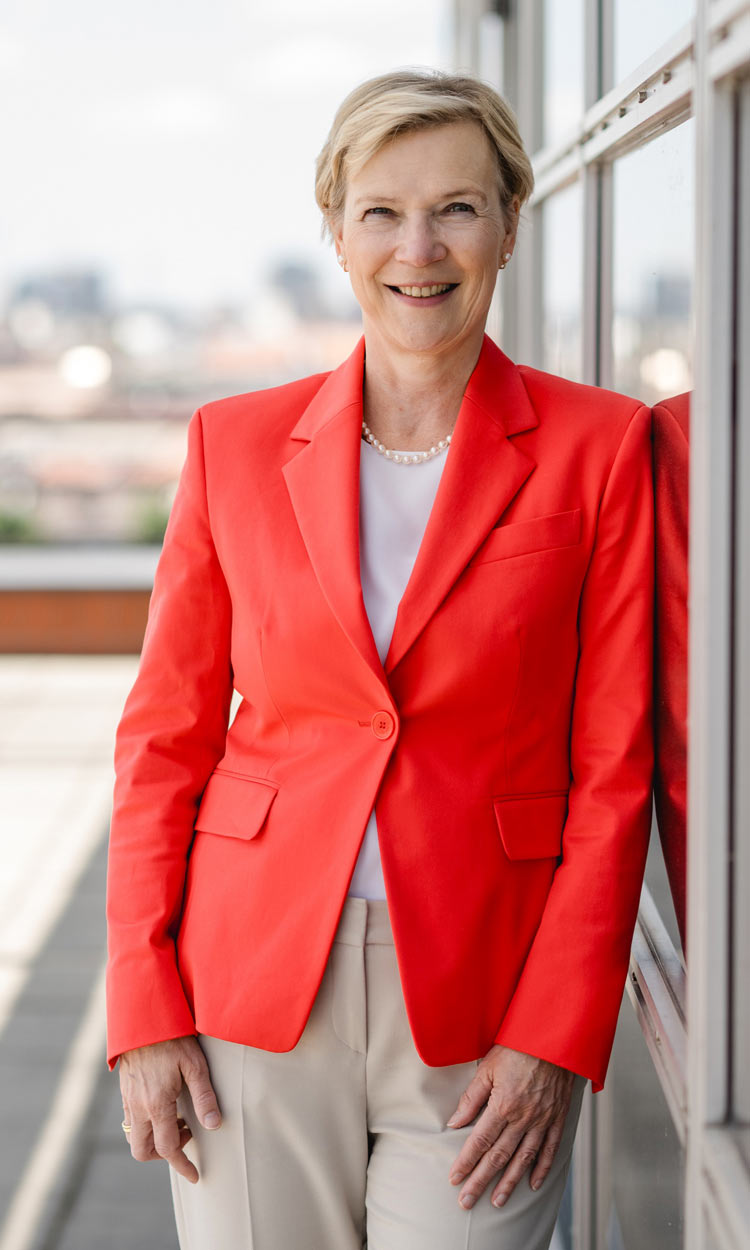
Yours, Eva Schewior
Jazz, Basketball & Fairplay
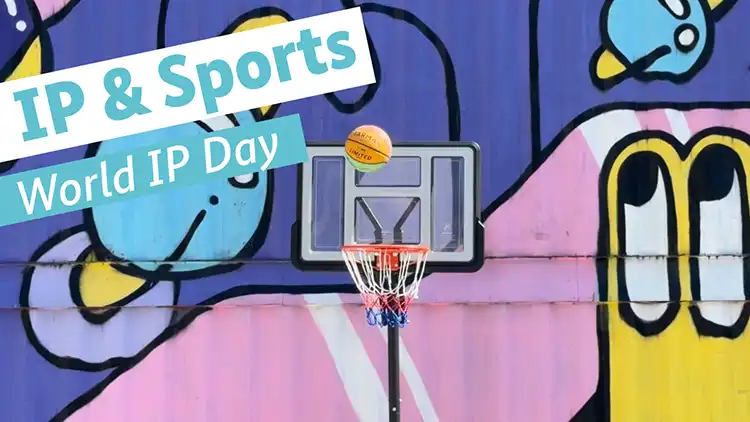
On the occasion of World IP Day under the motto “IP and Sports,” TEAM DPMA was live on site — with an information stand, our jazz combo, and a basketball court at Knödelplatz in Munich’s Werksviertel district, very close to our new office on Anzinger Straße.
Our goal? To make intellectual property tangible. And we succeeded: Through direct interaction, we were able to demonstrate how important patents, trademarks, and designs are for innovation, competition, and our everyday lives — especially in sports. See for yourself!
Dear users, if you follow this link, you will leave our website to access an external link from YouTube.
You can find more videos with useful information about intellectual property rights on our YouTube channel.
Tasks and organisationThe German Patent and Trade Mark Office: first-hand service and quality.
Every day, our staff experience first-hand what it means to be part of the “Land of Ideas”. It is the ideas of our customers who consciously choose the German Patent and Trade Mark Office (DPMA) to protect their know-how. This is because effective action against plagiarism and counterfeiting is possible, above all, on the basis of IP rights: Patents, utility models, trade marks and designs effectively protect intellectual property — be it a technical invention, a creative trade mark or the colours and shapes of a new product.
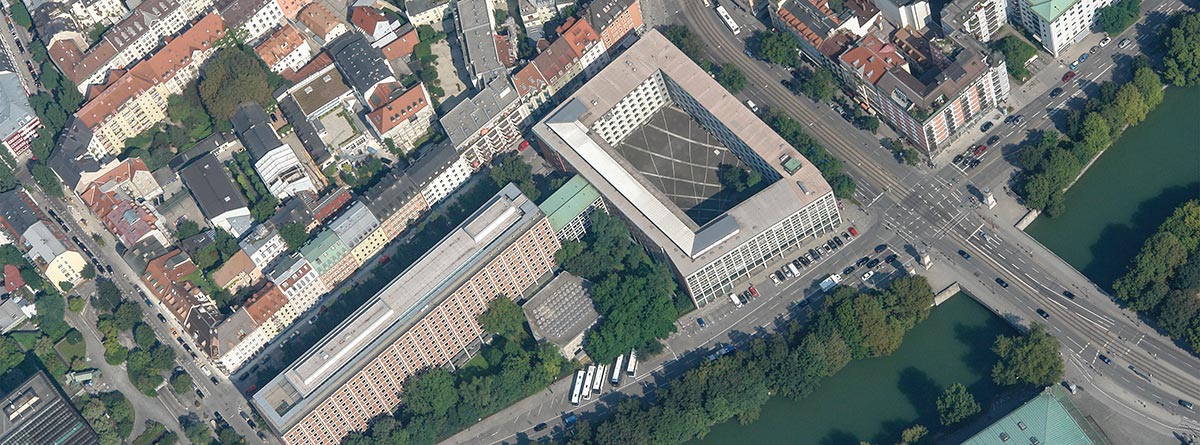
The DPMA is the German centre of expertise for the protection of intellectual property. A higher federal authority, it is subordinate to the Federal Ministry of Justice and Consumer Protection. With the examination of IP rights and the provision of services, our office promotes the innovative power and creativity of industry and plays an essential role in the international IP system. We examine inventions, grant patents, register trade marks, utility models and designs and manage, and inform the public of, IP rights. As the largest national patent office in Europe and the sixth largest national patent office in the world, our office stands for the future of Germany as a country of inventors in a globalised economy.
Its staff of approximately 2,800 at four locations provide services to inventors and companies.
- Munich
DPMA headquarters including senior management, administration and legal divisions as well as patent, trade mark and utility model divisions, arbitration boards - Jena
Sub-office with administrative and IT units as well as design division, an additional trade mark division and three patent divisions that are being established - Berlin
DPMA Information and Service Centre
(DPMA-IDZ) - Hauzenberg
Branch office with several teams for provision of information and for Customer Care and Services
In organisational terms, the DPMA is divided into four Directorates General:
Directorate General 1 — Patents and Utility Models
- More than 1,000 patent examiners organised in five clusters (Mechanical Engineering, Mechanical Technology, Electrical Engineering, Chemistry and Medical Engineering as well as Physics) with 40 patent divisions in total
- Utility model and topography division
- Patent and utility model administration
Directorate General 2 — Information
- Information services for the public and internal information services: database search, library, classification systems, Customer Care and Services, Internet editorial office
- Support for the 15 German patent information centres
- Operation and further development of all information technologies of the DPMA
Directorate General 3 — Trade Marks and Designs
- 13 teams in three divisions for trade mark examination
- Trade mark cancellation division
- Design division with design unit
Directorate General 4 — Administration and Law
- 16 specialist areas in four divisions, occupational health management
- All administrative tasks, including personnel and facility management, organisation as well as budget and legal affairs
- Patent attorneys and other agents as well as supervision of collective management organisations under the Act on Collective Management Organisations (Verwertungsgesellschaftengesetz)
Senior management
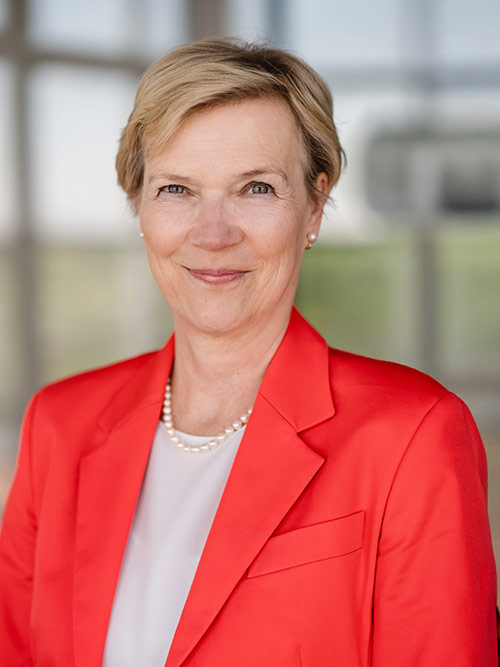
Eva Schewior
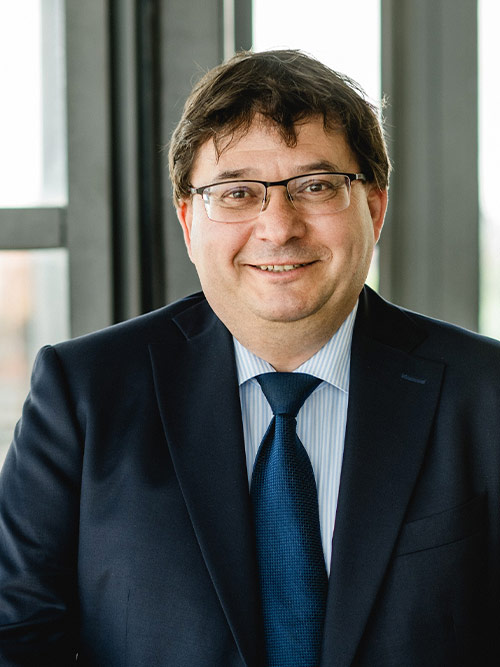
Bernd Maile
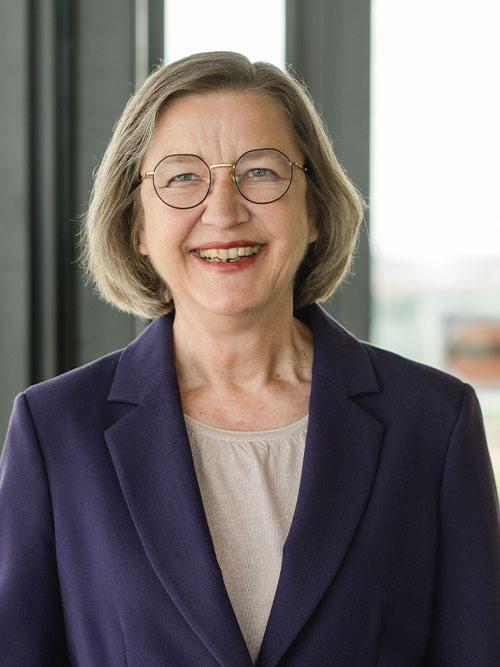
Dr Maria Skottke-Klein
Heads of the Directorates General
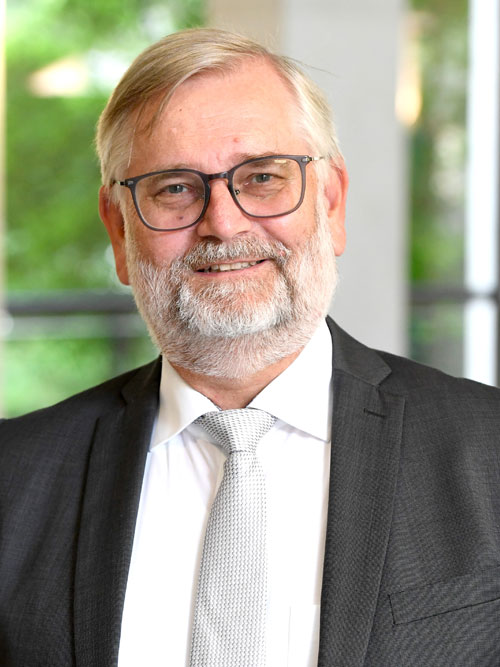
Patents and Utility Models
Dr Bernd Läßiger
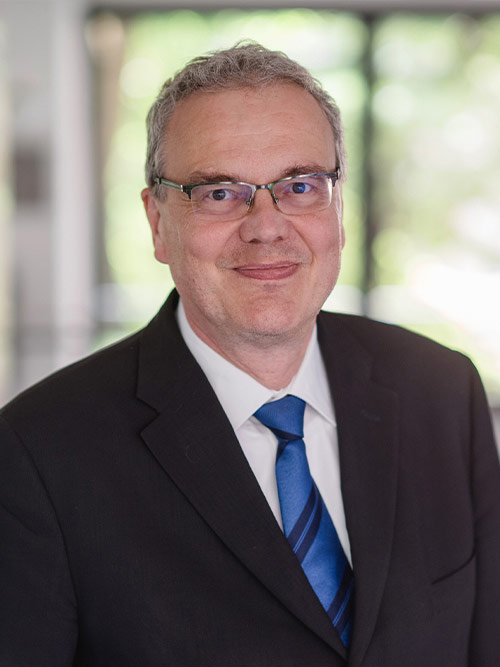
Information
Robert Lemperle
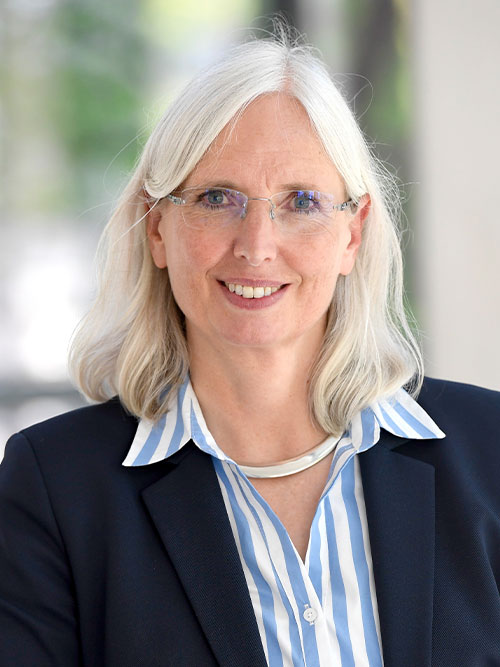
Trade Marks and Designs
Katharina Mirbt
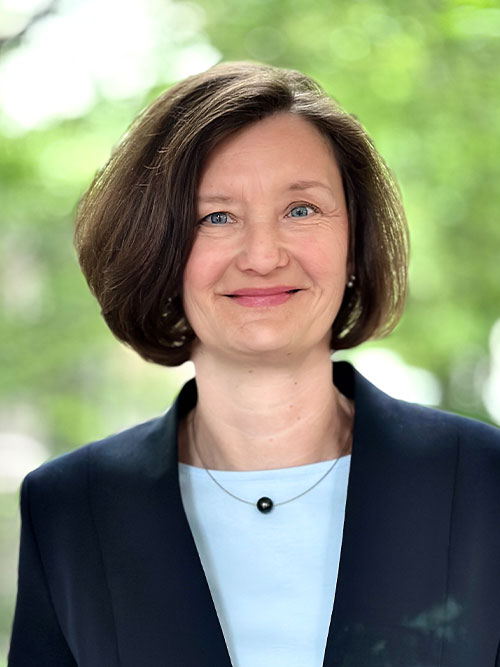
Administration and Law
Marion Kreß