
Overview Development and origin of patent applications
In 2025, a total of 62,050 patent applications (national applications and PCT applications upon entry into the national phase) were filed with the German Patent and Trade Mark Office (DPMA), 4.7% more than in the previous year. Thus, there were more than 60,000 applications for the first time in five years. From a German perspective, it is pleasing that the German applicants’ contribution to this growth was above average. While 42,349 applications came from German companies, research institutions and independent inventors (+5.6%), 19,701 applications were from abroad (+2.8%).
In economically difficult times, companies obviously turn to investing in research and development. In this context, the targeted protection of technical inventions remains an indispensable element to protect innovations against imitation, safeguard investments and thus strengthen one’s own competitiveness.
Upon filing of a patent application at the DPMA, a period of seven years commences, within which applicants can initiate the examination procedure by filing an examination request. Last year, there was again a slight increase (+2.9%) in such examination requests, too. The DPMA received 45,628 examination requests, which shows that applicants continue to appreciate the examination quality delivered by the DPMA. At the same time, the office once again proved its efficiency and increased the number of concluded examination procedures by 1.3% (45,839). The high number of granted patents is particularly pleasing (24,475, +2.2%). In 21,364 cases, though, the patent was not granted, since the examining sections refused the application, the applicants withdrew it or fees due were not paid. Correspondingly, the grant rate was 53.4% (2024: 52.9%).
This development clearly shows that patents are a key success factor for companies. They do not only protect technologies, but also shape global competition, economic sustainability and entrepreneurial capacity to act.
In 8,055 cases (previous year: 8,179), the examining sections refused an application. This corresponds to a proportion of 17.6% of the concluded procedures (2024: 18.1%).
Within nine months after publication of the grant of a patent, notice of opposition to the patent can be given. If, after expiry of this period, no notice of opposition has been given, the patent will become valid. In the year under review, 226 notices of opposition were given. In total, the DPMA handled 246 opposition proceedings. In 155 cases, patents were confirmed or at least maintained with limitations (63%). Only 59 patents were revoked, and 32 opposition proceedings were terminated as the opposition was found inadmissible.
In 2025, applicants filed 55,654 patent applications directly with the DPMA (+6.5% compared to the previous year). In addition, we received 6,396 PCT applications entering the national phase through the World Intellectual Property Organization (WIPO) in Geneva.
Any person seeking patent protection abroad must, as a rule, file separate applications with the respective national patent offices — a complex and costly process. The PCT Cooperation Treaty makes this procedure much easier: by filing a single application, applicants can enjoy the effect of a national application in 158 PCT contracting states.
The PCT procedure starts with the international phase (PCT application and global search). Following this central preliminary examination, the national phase, in which the relevant national offices decide on the grant of the patent, begins.
Electronic filing remained the most important filing option: 91.8% of all national patent applications received were online applications.
At the end of 2025, 158,848 national patents were in force (+3.4%).
The number of applications filed by applicants having their residence or principal place of business in Germany rose by 5.6%. In total, they filed patent applications for 42,349 inventions. This means that the percentage of domestic applications increased to 68.2% (2024: 67.7%).
The number of applications from abroad increased, too. With 19,701 applications, it was 2.8% above the previous year’s figure. Of these foreign applications, 3,605 originated from European countries (2024: 3,487) and 16,096 from non-European countries (2024: 15,675). The most significant increase was recorded in applications from Belgium (+25.5%). The number of applications from Austria also rose (885, +9.0%), as did those from Switzerland (+5.3%). The number of applications from Japan fell slightly (6,493, -1.5%). By contrast, the number of applications from the USA rose significantly again (6,197, +5.3%). Patent applications from China rose sharply by 19.3% to 975.
| Countries of origin | Applications | Percentage |
|---|---|---|
| Germany | 42,349 | 68.2 |
| Japan | 6,493 | 10.5 |
| United States | 6,197 | 10.0 |
| Republic of Korea | 1,314 | 2.1 |
| China | 975 | 1.6 |
| Switzerland | 949 | 1.5 |
| Austria | 885 | 1.4 |
| Taiwan | 555 | 0.9 |
| France | 360 | 0.6 |
| Sweden | 301 | 0.5 |
| Other | 1,672 | 2.7 |
| Total | 62,050 | 100 |
The automotive industry remained the strongest one in the patent area. As in the previous years, the top ten countries in terms of applications included carmakers and suppliers only. Combined, they filed around 30% of all patent applications. 2025 was the 18th year in a row in which Robert Bosch GmbH came in first, with 4,109 applications and a large lead. It was followed by Mercedes-Benz Group AG (2,726) and Bayerische Motoren Werke AG (2,553) in second and third places, respectively. With 1,912 applications, Audi AG was fourth, dropping Dr. Ing. h.c. F. Porsche AG to sixth place. Volkswagen AG came in fifth with 1,627 applications. With GM Global Technology Operations LLC (1,193) and Ford Global Technologies LLC (859), two US companies were once again among the strongest applicants at the DPMA. The DPMA records patent applications according to the applicant’s data, considering each company and each institution individually, irrespective of group affiliations.
German patent applications can be attributed to the individual German Länder according to the applicants’ residence or the company’s principal place of business. In the German Länder ranking, Baden-Württemberg was again first with 15,161 applications (-2.2%), followed by Bavaria, which considerably increased its applications to 12,575 (+10.6%), in second place. As in the previous year, North Rhine-Westphalia finished in third with 5,701 applications (+6.7%). If you compare the number of applications to the respective population, Baden-Württemberg, with 135 patent applications per 100,000 population, was ahead of Bavaria (95) and Lower Saxony (47). These are the German Länder where the big German carmakers are based.
In the case of applications filed by companies and research institutions, the DPMA distinguishes between the organisation filing the application and the natural person designated as the inventor. In the case of independent inventors or employees with inventions released by their employers, the applicant and the inventor are usually the same person. In 2025, this was the case for 5.2% of the applications (2024: 3.6%).
Furthermore, the DPMA also tracks how many patent applications can be attributed to individual applicants. In 2025, 5% of our applicants filed more than ten applications each (2024: 5.5%). These applicants are referred to as large patent applicants; they accounted for as many as 74.3% of all applications (2024: 75.1%).
While the continuing digitisation and the rapid technical progress promote innovations, they make it increasingly difficult for independent, non-institutional inventors to commercially exploit their ideas. The implementation of and patent protection for innovative concepts require important organisational resources and are very costly.
The International Patent Classification (IPC) is the global standard for the qualification of technological contents. A structured code consisting of letters and numbers systematically divides the entire area of technology into more than 70,000 categories. The competent examining sections attribute every patent application received by the DPMA to one or several IPC classes according to its technological content.
In an IPC concordance table, the World Intellectual Property Organization allocates these classes to fields of technology, which it combines into sectors. These technology sectors are “Electrical engineering”, “Instruments” (technical), “Chemistry”, “Mechanical engineering” and “Other fields”. Last year, the strongest sector at the DPMA was once again “Mechanical engineering” with 24,338 applications (+2.2%), followed by “Electrical engineering” (19,436, +9.1%), “Instruments” (9,376, +1.9%), “Chemistry” (4,613, +5.2%) and “Other fields” (3,895, -0.3%), which combines civil engineering, furniture, games and other consumer goods.
The strong growth in “Electrical engineering” (+9.1%) was mainly driven by the considerable innovative activity concerning digital technologies and battery technology. In the strong “Computer technology” field, patent applications rose by 10.9% to 3,679. This field includes inventions relating to image data processing and speech recognition, many of which use artificial intelligence. The increase was even stronger in the “Digital communication” field (1,222; +19.2%), where many inventions are related to the latest mobile network standards (5G/6G) and are thus important for the digital connectedness in a number of key technologies.
The development of the technology field “IT methods for management” was particularly dynamic with an increase of just under 60% (867). The field includes, for example, processes for energy and water supply, for manufacturing and production, for workflow control and for materials and inventory management — mostly with a view to increasing management efficiency. A specific example is the communication of electric vehicles with the recharging infrastructure. Related inventions doubled to almost 150. In some areas, the strong growth is driven by the new possibilities the use of artificial intelligence provides.
In the technology field “Electrical machinery, apparatus, energy”, there was also a significant rise in patent activity (+7.5%). This field includes the strongest of all subclasses (H01M), which combines batteries and fuel cells and which also experienced a considerable increase (+13.4%). The most active applicants in this field are carmakers and suppliers from Germany and abroad.
Application numbers continued to be high especially with respect to electric drives. As a consequence, “Transport”, where most applicants belong to the automotive industry, was once again by far the strongest technology field with 11,604 applications (+3.9%).
The advancement of electric drives and related components remains a growing innovative field. The development of information and entertainment systems in cars (infotainment) is also playing an increasing role. The subclass that includes, among other things, car instruments once again rose significantly. For example, innovations include new displays (head-up displays) and options to operate instruments in the driver’s cab by voice and gestures. Furthermore, there is an increase in inventions enhancing the user-friendliness of the instrumentation in cars — for example, by saving individual driver profiles to personalise the vehicle. In addition to convenience-oriented functions, applications concerning safety-relevant electrical components, for example for autonomous driving or innovative solutions for a fail-safe power supply in cars, also rise considerably.
The trend towards a decline in applications concerning inventions for internal combustion engines continued, albeit at a lower level. In 2025, after some years of decline, the technology field “Engines, pumps, turbines”, which is particularly relevant in this regard, rose again by 2.7%. While there was a fall in applications by German companies, the DPMA received considerably more applications from abroad, especially from Japan and the United States of America, compared to the previous year.
Top 5 Fields of Technology1
Patent applications in 2025
1 According to WIPO IPC concordance table, available at: www.wipo.int/ipstats/en/index.html#resources.
The number of requests for examination pursuant to section 44 of the Patent Act (Patentgesetz) increased slightly by 1.9% to 45,628 requests in total. On the basis of such requests, the competent examining sections conduct a comprehensive search regarding the relevant state of the art for the assessment of the application. Subsequently, an examination is conducted as to whether the subject matter of the application is new, involves an inventive step and is industrially applicable and whether possible exclusions from patentability exist. It is also examined whether the application documents describe the technical invention entirely and in such a way as to enable the carrying out of the invention. Applicants are notified of the examination result in a detailed office action, which usually also requests them to comment on or correct the patent application in order to dispel possible doubts. At the end of the procedure, the examining section finally decides whether and to what extent a patent can be granted or whether the application must be refused.
Pursuant to section 43 of the Patent Act, applicants can file a search request in order to have the state of the art identified for their application. The search result is an objective basis for assessing the patentability and often helps decide whether to file subsequent applications with other offices. The number of search requests once again increased slightly to 16,500 (2024: 16,413). With 15,908 concluded searches pursuant to section 43 of the Patent Act, the performance of the examining sections remained constant compared to the previous year (2024: 15,901).
| patent procedures | 2021 | 2022 | 2023 | 2024 | 2025 |
|---|---|---|---|---|---|
| Examination requests received | 43,355 | 43,474 | 44,824 | 44,351 | 45,628 |
| - including requests filed together with applications | 22,694 | 22,685 | 23,994 | 23,673 | 25,424 |
| Search requests pursuant to section 43 Patent Act | 14,971 | 14,672 | 15,623 | 16,413 | 16,500 |
| Concluded searches pursuant to section 43 Patent Act | 15,168 | 14,818 | 14,797 | 15,901 | 15,908 |
| Examination procedures concluded | 48,523 | 45,534 | 42,678 | 45,263 | 45,839 |
| Examination procedures pending at the end of the year | 222,960 | 220,580 | 222,445 | 221,311 | 220,410 |
Parties can challenge decisions of the German Patent and Trade Mark Office by lodging an appeal with the Federal Patent Court. Such appeals can concern a patent not granted as requested, the refusal of a patent application or a decision in opposition proceedings.
A Board of Appeal of the Federal Patent Court decides whether an appeal is admissible and well-founded. The individual boards, with an equal number of female and male members, consist of legally and technically qualified judges. It is from these technical experts from science and engineering that the Federal Patent Court gains its specific expertise, since all judges at other courts (for example, civil courts) are usually lawyers. The technically qualified judges participate in all proceedings under patent law that concern the technical assessment of an invention. This includes, in particular, proceedings regarding the grant of a patent, actions for the revocation of patents and other disputes about the validity or extent of patents.
In 2025, too, we once again saw a decrease in appeal proceedings brought before the Technical Boards of Appeal: a total of 168 appeal proceedings were received, which represents a decrease of 24.3%.
In Focus Quantum technology and renewable energy sources
Quantum technology
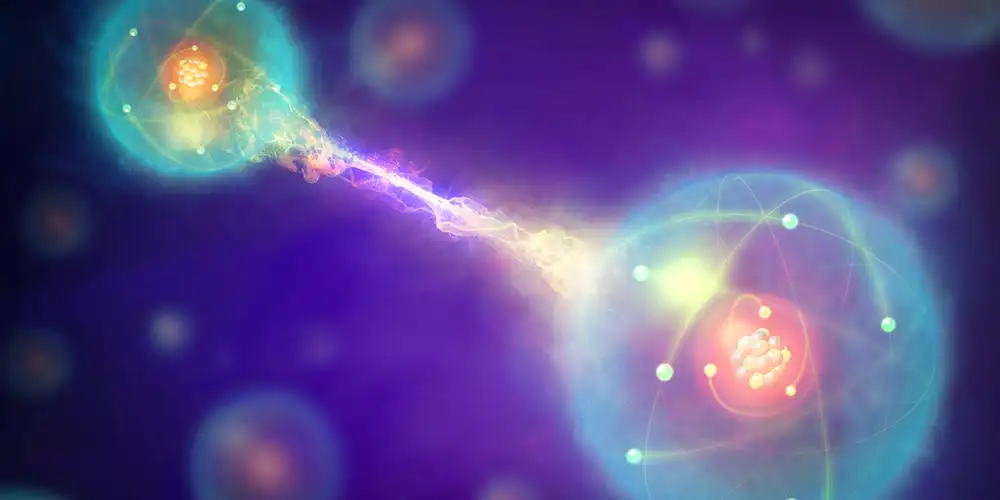
Quantum technologies use the special physical properties of microparticles such as atoms, electrons or protons to process, transfer or make extremely precise measurements of information in an entirely new way. This opens up a variety of new application areas: from high-performance quantum computers, which could enable complex calculations in cryptography, materials research or the development of active substances, to tap-proof quantum communication to highly sensitive quantum sensors, which can be used in navigation, medicine or environmental measurements, for instance.
For this analysis, we considered five of the sub-fields relevant in quantum technology: quantum computing, quantum communication, quantum optics, quantum components and other quantum applications, for example quantum sensor technology.
Our analysis takes into account published patent applications with effect in Germany at the DPMA and the European Patent Office (EPO), without double counting. Patent applications are normally published after 18 months. Consequently, inventions newly filed in 2025 are not included in the analysis.
Since 2016, the development of the number of applications relating to quantum technology has been highly dynamic and increased almost sevenfold. In particular, there has been a strong growth in quantum computing, possibly as a result of the increased use of artificial intelligence applications. Most applications concerning quantum technology originate from the United States, followed by Germany and the Republic of Korea in second and third places, respectively.
The top applicants were Fujitsu Limited from Japan, LG Display Co. Ltd. and Samsung Display Co. Ltd. (both from Korea). These companies mainly produce displays. There is no German company in the top 5 because these applications are distributed among many different applicants from industry and research.
1 Applications published by the DPMA and the EPO, avoiding double counts.
2 Based on a Depatis search using search terms in combination with relevant IPC fields. IPC classes valid at the time of retrieval counted proportionately. Not exhaustive. Results may also include other uses.
3 IPC fields: B82Y 10, G06N 10.
4 IPC field: H04.
5 IPC fields: B82Y 20, G02F 1.
6 IPC fields: H01L 21/20, H10.
7 Including quantum sensor technology, including scanning tunnelling microscopy and other applications, in particular semiconductor laser applications or random number generation. IPC fields: G01Q 60, G01R 33/26, G06F 7/58, H01S 5.
Quantum computing is one of the most fascinating technologies of the 21st century. It has the potential to overcome current computational limitations, but it also faces considerable technical challenges. Currently, corresponding research is very dynamic, as can be seen from the significant increase in applications. In 2025, applications rose by 46.2% compared to the previous year. Quantum computing is a ground-breaking calculation paradigm based on the principles of quantum mechanics and capable of solving certain problems exponentially faster than classic computers. While traditional computers use bits (0 or 1), quantum computers use qubits (quantum bits), which can exist in multiple states simultaneously – a phenomenon called superposition. This enables quantum computers to process a multitude of calculation methods simultaneously; in particular, they will be able to make artificial intelligence applications significantly faster, such as machine learning algorithms.
Quantum communication uses the principles of quantum mechanics to enable tap-proof data transfer and quantum-encrypted communication. This makes it one of the key technologies for the secure transfer of data in the future. Despite current challenges concerning scalability, costs and standardisation, research teams worldwide are pressing ahead with the implementation of quantum communication. When these hurdles have been passed, quantum communication can fundamentally change the way data are encrypted and transferred. In this field, too, application numbers have consistently grown in the past years (+13%; 174 applications in 2025).
Quantum optics (32 applications; +18.5%) is an interdisciplinary field of research that combines the principles of quantum mechanics and those of quantum optics. It explores the behaviour of light and matter at the quantum-mechanical level and has led to ground-breaking technologies such as lasers, which are now widely used, for example in medicine (laser surgery) or in communication (fibre optic cable).
With 209 applications, the quantum components segment as the second strongest field increased by 14.8% in 2025. Quantum components are needed for quantum information technology and enable the development of quantum computers, quantum communication systems and quantum sensors. Unlike traditional electronic components, they use quantum phenomena such as superposition, entanglement and interference. These components are often extremely sensitive to interferences and require special cooling and insulating methods. The future development of quantum information technology significantly depends on how fast the development of error-free, scalable quantum components will be.
Quantum physics opens up a broad range of applications that go far beyond quantum computers and quantum communication. Many of these technologies are at the research stage or at an early stage of commercial use, while other technologies might change the world in the coming decades.
Quantum sensors use quantum phenomena for high-precision measurements that could not be made using traditional sensors. They revolutionise medical diagnosis through extremely precise measurements of magnetic fields and small molecules. This might enable contactless real-time ECGs and improved MRIs (up to 10,000 times more sensitive) in the future. In the long term, this can significantly improve the early detection of diseases such as strokes and cancer.
Renewables and batteries
Current figures show that innovative activity regarding climate-friendly technologies continues to be high. Especially concerning batteries needed for storing renewable energy, the number of inventions is seeing a considerable ongoing increase. Obviously, German companies, too, put a strong focus on climate-neutral innovations. For this analysis, we have considered patent applications published by the DPMA and the EPO with effect in Germany concerning the fields of renewables and battery technology.
In particular in the field of batteries we saw a considerable upswing in patent applications published compared to the previous year (+25.8%).
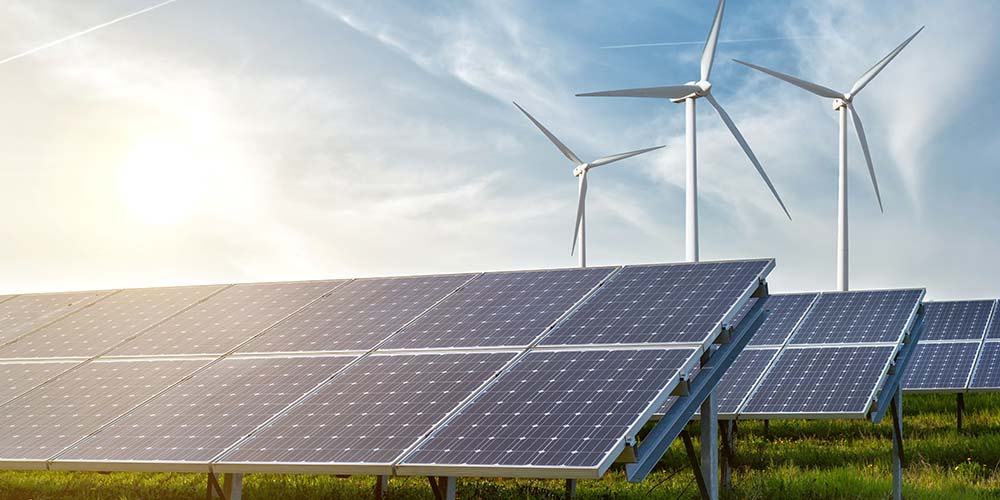
Renewables include central fields of technology such as wind and solar energy, biomass, geothermal energy and hydropower. Their common goal is the efficient use of natural resources for a climate-neutral energy supply. By transforming renewable resources into electricity, warmth or fuels and by using natural processes (for example, biogas or geothermal energy), these technologies make a crucial contribution to slowing down human-caused climate change.
In the field of wind turbines Germany saw a significant increase in application numbers (+24.2%) and firmly remains in second place behind Denmark with a share of 27.8% of all applications in the country ranking. In solar technology, on the contrary, the number of published German applications decreased considerably. With a share of 21.8% of all applications, Germany lost its leading position and ranks second behind China (23.8% of all applications).
1 Applications published by the DPMA and the EPO avoiding double counts.
2 IPC classes valid at the time of retrieval counted proportionately. Without claim to completeness. Results may also include other uses.
3 B60L 53/51, C02F 1/14, E04D 13/18, F03G 6, F24J 2, F24S, G05F 1/67, H01L 31/04 to H01L 31/078, H10F 10/00 to H10F 10/19, H10F 19/00 to H10F 19/90, H10F 77/42 to H10F 77/48, H10F 77/63 to H10F 77/67, H10F 77/80 to H10F 77/90, H02J 7/35, H02N 6, H02S, H10K 30/50 to H10K 30/57, H10K 39/10 to H10K 39/18.
4 B60L 53/52, F03D.
5 F03B 7, F03B 13/10 to F03B 13/26.
6 C02F 11/00, C12M 1/107, C12M 1/113, C12P 5/02, F03G 3, F03G 4, F03G 7/00 to F03G 7/08, F24J 3, F24T 10/00 to F24T 50/00, F24V 40/00 to F24V 40/10, F24V 50/00, F24V 99/00.
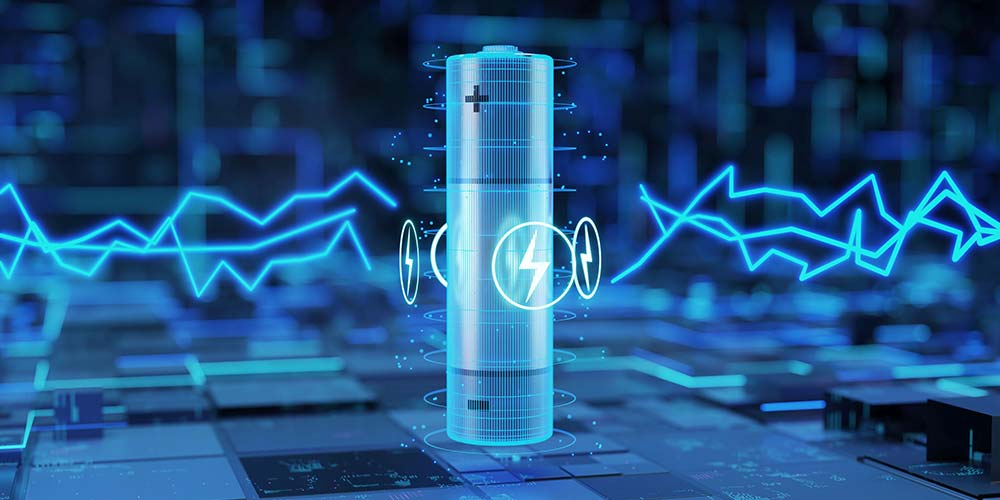
The considerable upward trend of battery technology also continues in 2025. The sector benefits from a wave of innovation that is above all driven by the rapid development of electric mobility. Compared to the previous year application numbers rose by 25.8%. With a considerable increase of 33.4%, the Republic of Korea continues to be the country with most applications (2,419) in this area. As in the previous years, China follows with 1,749 applications in second place (+10.8%). If one were to add together the registrations from China and Hong Kong, this would result in an increase of just under 38 per cent (2024: 1,578 + 133; 2025: 1,749 + 608). Application numbers from Japan showed a particularly strong growth (+28.2%). With 1,340 applications (+20.6%), Germany ranks fourth, as it did last year.
The ranking of applicants in the field of batteries is led by two Korean companies: LG Energy Solution, Ltd. (1,148 applications) and Samsung SDI Co. Ltd. (740 applications). Contemporary Amperex Technology (Hong Kong) Limited comes third with 577 applications. With GM Global Technology Operations LLC in fifth place there is also a US-enterprise among the top 5 applicants.
The vast majority of patent applications in this sector focuses on the development of sustainable and environmentally friendly battery technologies. At the same time, these batteries must be produced at low cost, but also must have a high energy efficiency and demonstrate long-term stability in performance.
1 Applications published by the DPMA and the EPO avoiding double counts.
2 IPC classes valid at the time of retrieval counted proportionately. Without claim to completeness. Results may include automotive and other applications.
3 B60L 50/64, B60L 53/53, H01M 2, H01M 4/02, H01M 4/04, H01M 4/13 - H01M 4/84, H01M 10, H01M 50, H02J 3/28, H02J 3/32, H02J 15/00.
Briefly explained: Participation of the DPMA in the WIPO GREEN initiative Helping green innovations achieve a breakthrough
International online platform for technology exchange: since September 2025, the DPMA is partner of the WIPO GREEN initiative. By participating in the WIPO GREEN programme, the DPMA supports providers and users of innovative green technologies to connect with each other, thus driving the development and distribution of these technologies. The platform already has over 130,000 entries.
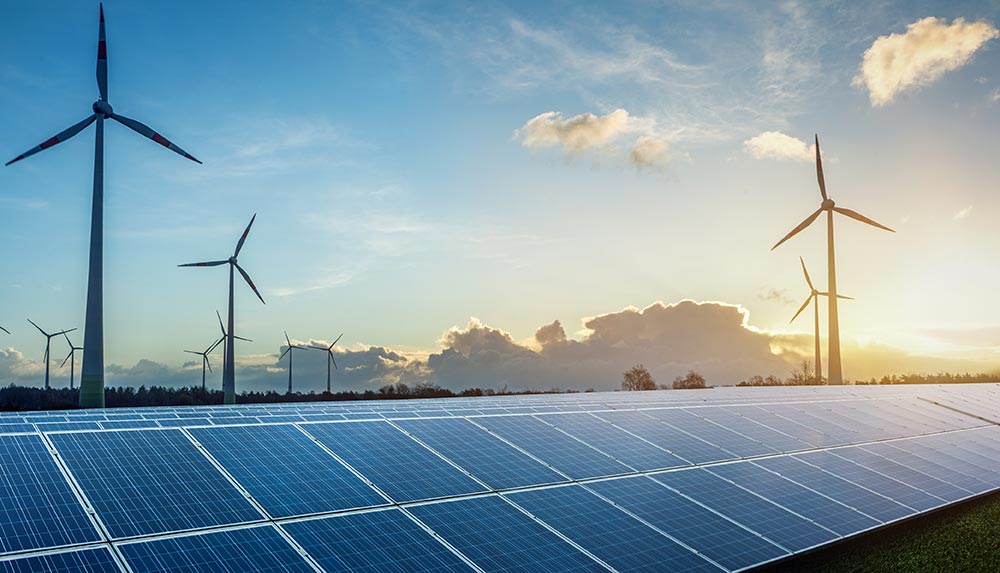
Renewable energy (solar and wind energy), energy efficiency, circular economy, green IT and sustainable mobility minimise environmental damage, increase the efficient use of natural resources and promote sustainability of the economy and in our daily life. Green technologies therefore make an important contribution to overcoming global challenges, for example to adjusting to climate change or to sustainable farming. Markets for green innovations also play a key role for sustaining our basis of life and meeting basic needs.
For such innovations, the World Intellectual Property Organization (WIPO) created the online platform WIPO GREEN in 2013. It connects inventors of environmentally friendly technologies with investors and partners from industry via their database, their network and their funded projects. By bringing together key players, it promotes partnerships and strengthens a global ecosystem for green technologies. Moreover, WIPO GREEN not only provides a platform for market-ready technologies protected by IP law, but also supports the development of sustainable new solutions.
In 2024, WIPO GREEN listed over 130,000 registrations of technologies, technology “needs” and experts. Over 150 partners work together, among them small and medium-sized enterprises as well as Fortune 500 companies, that is companies with the highest total revenue in their respective sector. More than 2,500 users world-wide make use of the platform, which has led to over 1,000 connections via databases, events and projects. On WIPO GREEN, you can find about 15,000 inventions from Germany – sourced from a WIPO database as well as actively uploaded by German companies in 200 cases.
The DPMA as centre of expertise in the field of industrial property protection in Germany is committed to promoting environmentally friendly technologies. We will further strengthen the cooperation with WIPO, actively support the activities of WIPO GREEN and – for example by means of raising IP awareness – foster the technology transfer in the field of environmental technologies. In this way, the DPMA makes an important contribution to achieving the goal of making the EU climate-neutral by 2050.
Further information and free access to WIPO GREEN can be found here on the webpages of WIPO.
In focus The German patent: commercial use and legal enforcement
Patents protect innovations and open up commercial opportunities. At the same time, patent proprietors need to be in the position to enforce their IP right and protect it from attacks. The German patent system provides a legal framework that allows enforcement even abroad.

A granted patent is a strong IP right. If used correctly, it is an important economic instrument: it can help to protect resources expended on research and development and to plan new investments. It leads to an increase in value and can be beneficial to receiving funding. Thanks to the targeted protection of a technical invention, companies can effectively confront competitors and create a sustainable competitive advantage.
A patent protects one’s own invention, but, of course, limits the business activity of others. Therefore, it is possible to take action against patents. This means that the procedure does not end upon a patent being granted: patent proprietors need to be in the position to enforce their IP right when it is infringed by competitors and to simultaneously defend themselves against attacks on its validity.
Patent proprietors can allow third parties to use their invention against payment of a fee. Such licence agreements are an established way to generate income, develop new markets or engage in cooperation projects without patent proprietors having to produce or sell products themselves.
But if you own a patent granted in Germany, you also have the right to prohibit the use of the invention in Germany. If third parties violate this right, the patent proprietor may demand a cease-and-desist declaration in infringement proceedings before the patent senate of a regional court and may also claim damages. The court can even order the infringing products to be destroyed or recalled.
Cross-border enforcement
German courts have a lot of expertise in this respect and have a top position even by European standards: around half of all European infringement proceedings are conducted before German courts. Indirectly, such infringement proceedings can also have a cross-border effect outside Germany: where infringers having their residence or principal place of business in Germany offer a patented product and produce it abroad, they can be prosecuted by a German court. Likewise, it is possible to take action against the infringement of a patented process used across borders if a process step is made in Germany.
If companies or individuals feel that their rights are restricted by a patent, they can file a notice of opposition within the first nine months of the publication of the patent grant. As a rule, any person may give notice of opposition in a written statement — except for the patent proprietor themselves. Proving one’s own legal or economic interest is not required for such a notice of opposition.
In the opposition proceedings, a panel consisting of at least three members of the competent patent division will then assess whether and to what extent the statutory grounds for revocation are fulfilled. Ultimately, the panel can maintain the challenged patent as granted, maintain it with limitations or revoke it.
A patent may even be challenged after the expiry of the opposition period or following the conclusion of opposition proceedings. To this end, a revocation action can be brought before the Federal Patent Court. If a patent is then revoked by court, it will be retroactively invalid, meaning invalid from the outset. In such a case, the patent proprietor can incur significant costs, as they are required not only to bear the costs of the proceedings, but also to repay any licence fees generated.
Infringement and revocation: separate proceedings at different courts
In Germany, infringement and nullity proceedings often take place simultaneously. If someone is sued for a patent infringement, they almost always defend themselves by challenging the validity of the patent. In Germany, what is known as the “separation principle” leads to two separate proceedings concerning the same patent: the infringement proceedings before the regional courts and the nullity proceedings before the Federal Patent Court. The nullity boards at the Federal Patent Court, whose members also include technically qualified judges with expertise in engineering or sciences, assess whether there are the statutory grounds for revocation of the patent. And the patent senates at the regional courts, which consist exclusively of lawyers, assess whether any person has infringed an existing patent.
The technical and legal specialisation of the courts ensures the high quality of the decisions in both proceedings. However, the two proceedings often differ in duration, which can result in a time gap between the decisions.
A German patent is a powerful tool to protect and commercially use technical innovations and position oneself in competition. Its enforcement and licensing open up opportunities, but it also involves legal and financial risks. Therefore, the careful filing, strategic use and realistic evaluation of one’s own form of protection are crucial for long-term success.
Additional information on patent protection is also available on our website.
In focus: Our new publication erfinden Searching for solutions in the world of patents
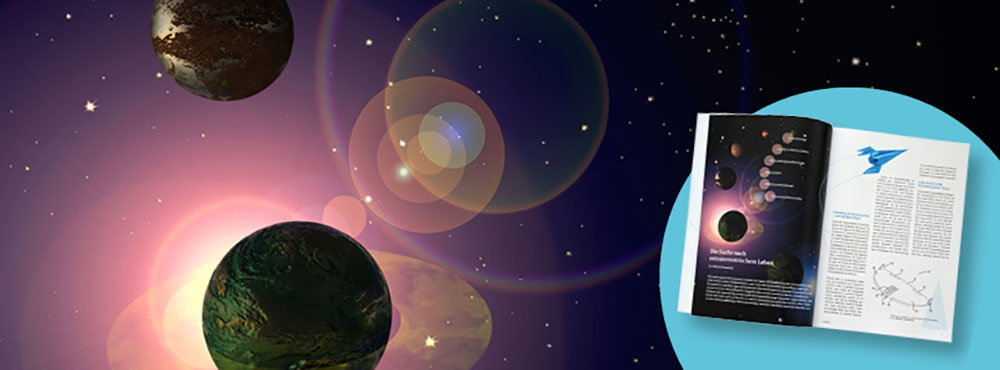
From portable rovers that can search for life on Mars to recycling super magnets for wind turbines: our publication erfinden offers fascinating articles from the world of patents and shows how IP rights contribute to the solutions for tomorrow’s world. It´s inspiring, profound — and the result of a substantial relaunch.
Are we really alone in the universe? Or is there other life out there? Two very philosophical questions — that also affect intellectual property. Why? Because the search for extraterrestrial life is full of innovations protected by patents: autonomous rovers, self-flying drones and underwater vehicles that navigate on their own all enable the search for signs of life on other planets. This exciting journey through patent literature is part of erfinden, which has replaced our previous publication “Erfinderaktivitäten”.
Articles by patent examiners
The contributions of our patent examiners to erfinden are inspired by the technological inventions they encounter during their daily work. These range from procedures to reduce optical irritations in car displays to more precise thunderstorm forecasts to the production of super strong magnets with fewer rare-earth elements.
About solutions that matter for society
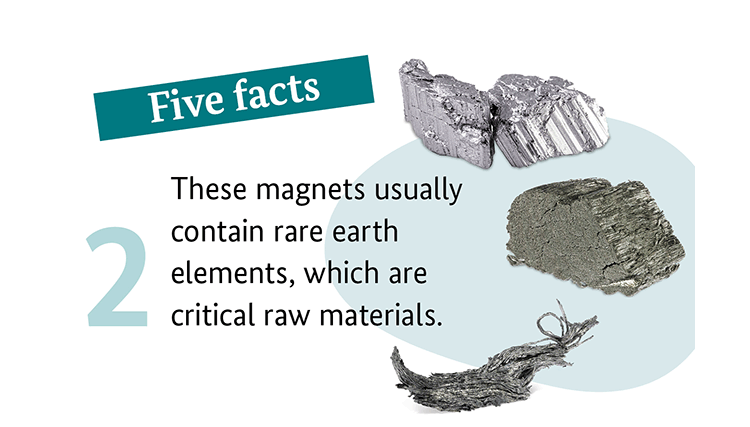
The articles show how technical IP rights offer solutions for social challenges. One example: reducing the use of rare-earth elements for super strong magnets. These high-performance permanent magnets are needed for the motors of electric vehicles as much as for wind turbines. The production of super strong magnets often includes the use of rare-earth elements — critical raw material that we usually have to import from other parts of the world. Finding a way to do this with fewer rare-earth elements contributes to the protection of the environment and promotes our national economy’s raw material sovereignty during the energy transition.
For a broad target audience
With erfinden, we want to reach readers of the general public as well as experts of their respective fields. Large photos, illustrations and explanations: the captivating design presents the topics in a straight-forward way, and the combination of text and visual elements adds to the accessible nature of the magazine.
Content on all channels
The publication erfinden will be released annually in autumn. The substantial relaunch comes with a sustainable approach for the new content: the print edition of erfinden will be made available to a broad readership via public libraries, universities, patent information centres and DPMA events. The individual topics will also be showcased on our webpages and on social media via LinkedIn. Meaning that on all our channels, we can’t help but wonder: Are we really alone in the universe? Or is there other life out there?