Intellectual property and music: Feel the beat of IP
From rhythms that make us dance to lyrics that express our feelings, music enriches every aspect of our lives. World Intellectual Property Day 2025 shows how creativity and innovation, supported by intellectual property rights, create a vibrant, diverse and thriving music scene that benefits everyone. Join us in celebrating the universal language of music and the creative people behind it!
World IP Day was first proclaimed by World Intellectual Property Organization website (WIPO) at the suggestion of UNESCO in 2000, exactly 30 years after the WIPO founding convention came into force on April 26, 1970.
Patent information centers and DPMA join in the celebrations
World IP Day is celebrated all over the world and everyone - whether patent and trade mark offices, universities, non-governmental organizations - is invited to celebrate this day, the "sound of music" day. The DPMA is also taking part in World IP Day and, together with the patent information centers (PIZ), is offering events on all aspects of intellectual property protection.
- To the event overview (in German)
The "sound of music" that you may have in your ear

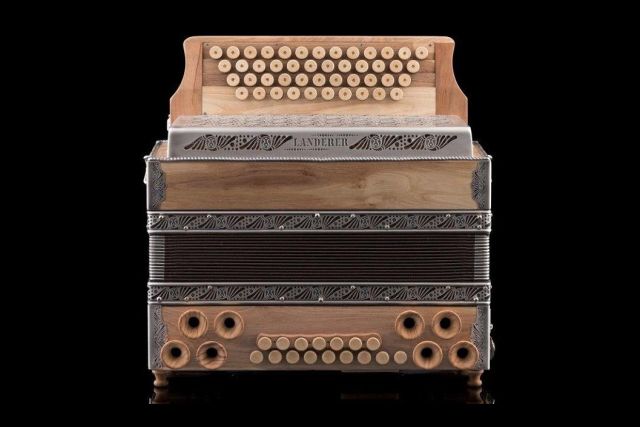
The "sound of music" in the design register




The "sound of music" in the law of copyright
Can I simply cover a piece of music and what do I have to bear in mind?
Pieces of music are protected by copyright - therefore, if you want to play (cover) someone else's piece of music in public, for example at a folk festival or concert, you will usually need the appropriate licenses. A license is the right to use a copyrighted work in a certain way, for example to play the piece of music in public. Collecting societies, such as GEMA in Germany, are often the right contact here. If the author is not represented by a collecting society, you should clarify the use with them (or the rights holders) directly. If the performance is not public, for example at a private party, no license is required.
By the way: Even if you are planning a public event with pieces of music that are either already old and therefore no longer protected by copyright (authors have been dead for more than 70 years) or whose authors are not represented by GEMA, it is advisable to register the event with GEMA. This is because, according to case law, it is generally assumed that GEMA may enforce certain rights of the author or rights holder, such as the performance rights to entertainment music. This presumption also extends to the fact that the works are protected by copyright. By registering, GEMA can check whether the pieces of music may be played without a license (and therefore free of charge).
What do I have to bear in mind if I want to adapt a well-known song?
If you want to rewrite a copyrighted song or change the melody, this is referred to as an “arrangement”. Publication or use is then generally only permitted if the author or rights holder has agreed to this. Furthermore, only then can you register the arrangement with GEMA.
It is always permitted to adapt pieces of music whose term of protection has expired. In Germany, this is the case if at least 70 years have passed since the year of the author's death.
For example, the composer Arnold Schönberg died on July 13, 1951, which means that his works have been in the public domain since January 1, 2022 and may be freely adapted in these (original) versions. However, arrangements by third parties may still be protected by copyright.
What happens if a piece has several authors? Not every piece comes from a singer-songwriter - it is therefore not uncommon for a piece of music to have several authors. For example, several authors of a song lyric or several composers of a melody. The work is then in the public domain if the longest living co-author has been deceased for 70 years. This also applies to so-called "musical compositions with lyrics", where both contributions were created specifically for the musical composition with lyrics in question.
Attention: The singer is not always the author! Therefore, you cannot simply change a song 70 years after the death of the performer. Instead, you must always check who the author or authors are and whether they have been dead for at least 70 years.
The "sound of music" in pop culture
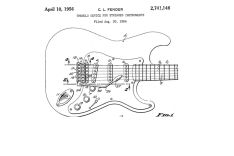
The "sound of music" also inspires the European Patent Office

For the European Patent Office (EPO), too, the WIPO motto "IP and Music: Feel the Beat of IP" emphasises the powerful connection between creativity, music and intellectual property. To celebrate World IP Day, the EPO has prepared a playful tribute to the style of vinyl albums with the "music album drop", designed to arouse curiosity and stimulate conversation about intellectual property.
Music as a universal form of creative expression - this also applies to WIPO Director General Daren Tang, who recorded a video message to mark World IP Day 2025. For more information on this year's celebration, WIPO's calendar of events, and information on previous World IP Days, please visit the World Intellectual Property Organization website (WIPO).